
- Published on 15 Nov 2024
- Last updated on 2 Aug 2025
- Reading Time: 6 minutes
Catch me if you can! How to beat GPT-4 with a 13B model
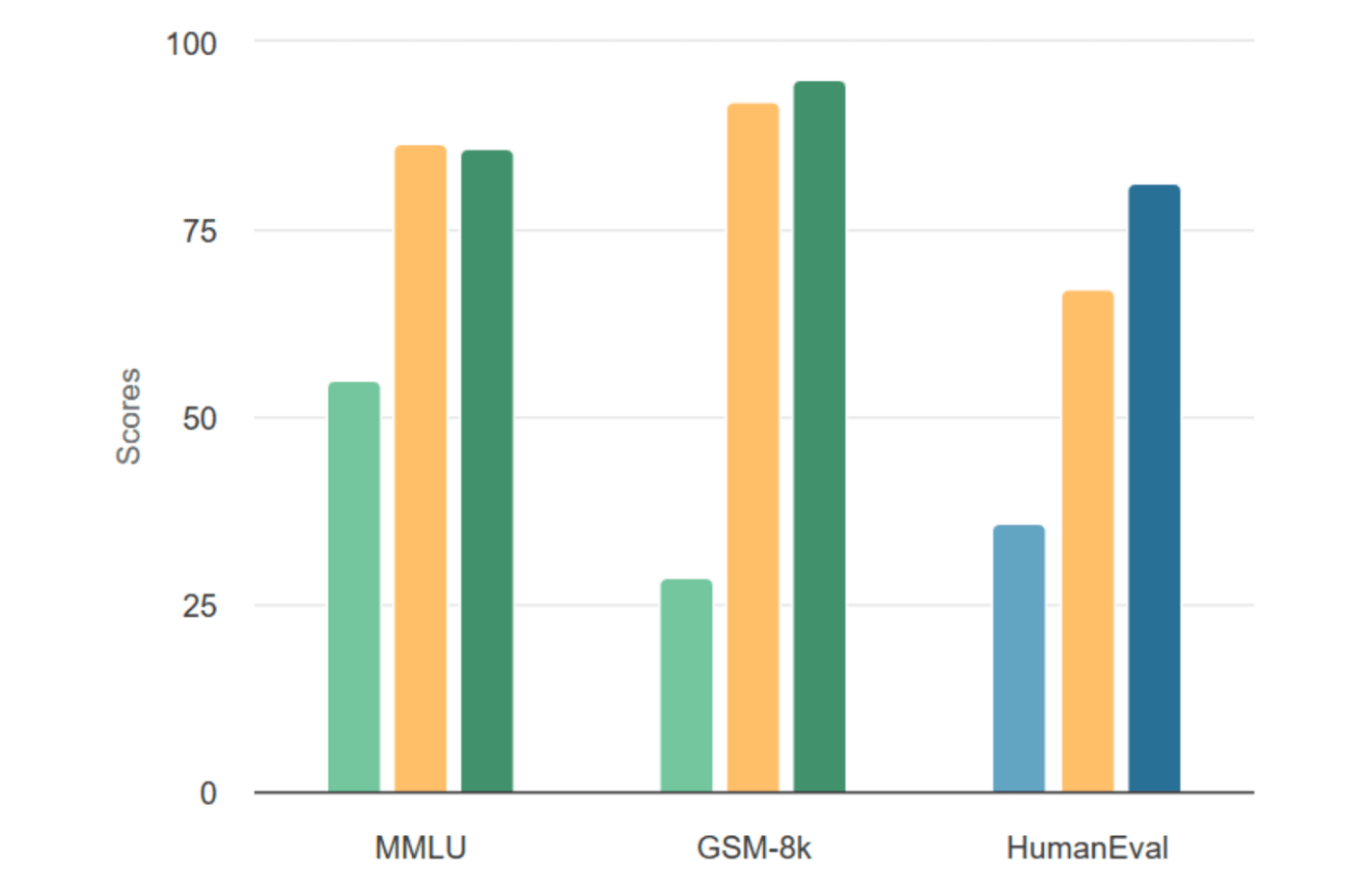
Announcing Llama-rephraser: 13B models reaching GPT-4 performance in major benchmarks (MMLU/GSK-8K/HumanEval)! To ensure result validity, we followed OpenAI’s decontamination method and found no evidence of data contamination.
Authors
Shuo Yang*
Wei-Lin Chiang*
Lianmin Zheng*
Joseph E. Gonzalez
Ion Stoica
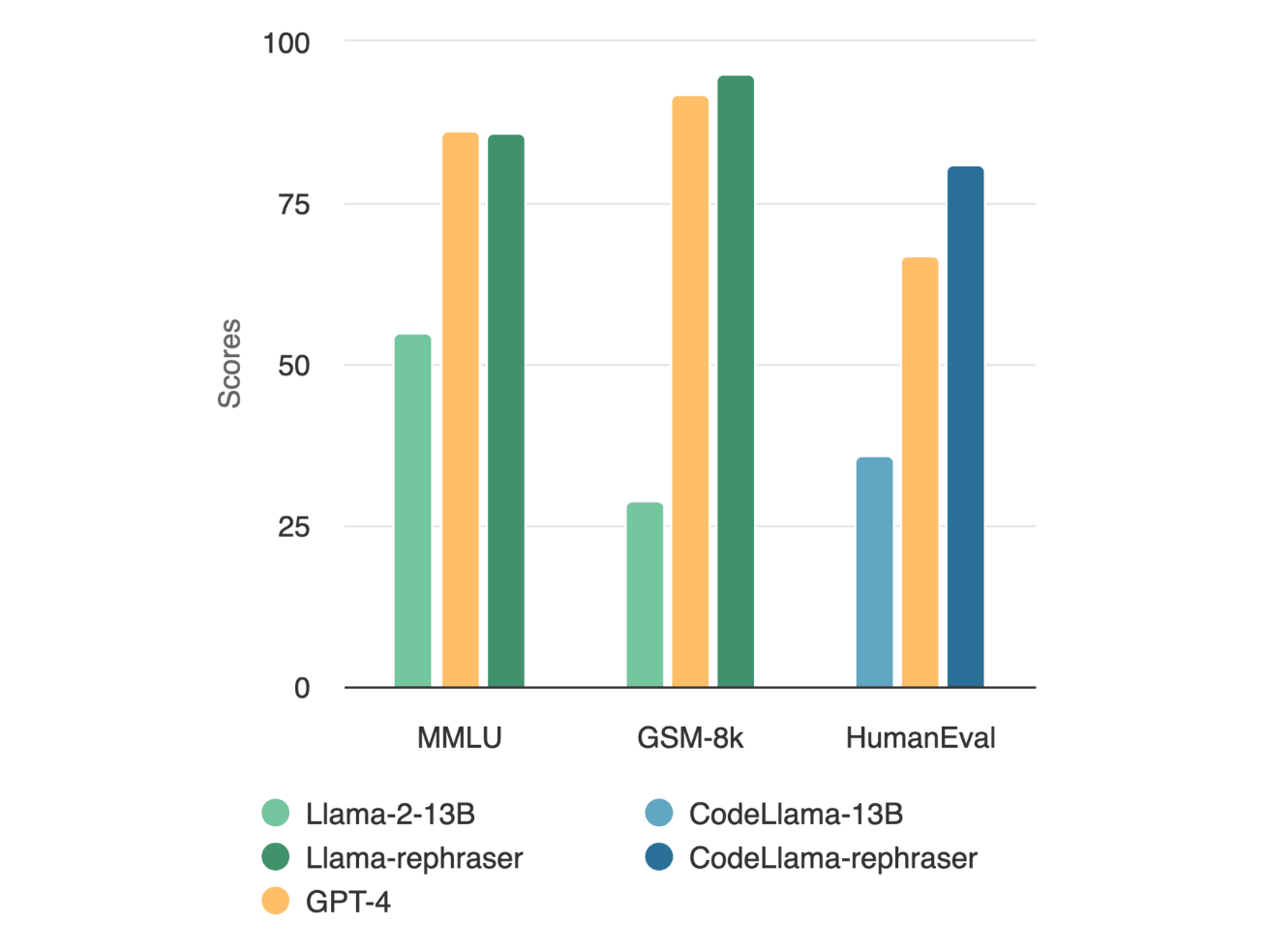
What’s the trick behind it? Well, rephrasing the test set is all you need! We simply paraphrase a test sample or translate it into a different language. It turns out a 13B LLM is smart enough to “generalize” beyond such variations and reaches drastically high benchmark performance. So, did we just make a big breakthrough? Apparently, there is something wrong with our understanding of contamination.
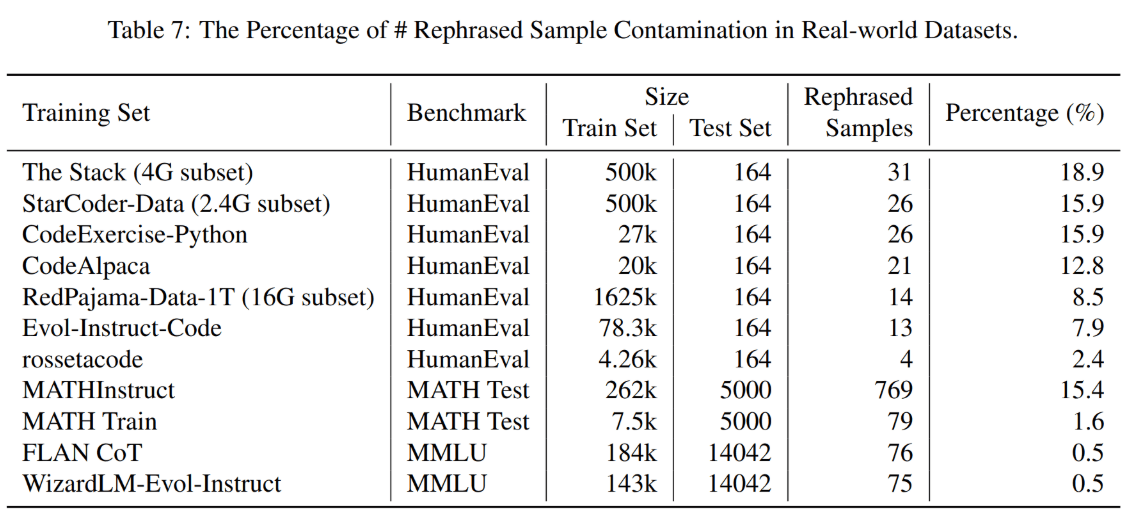
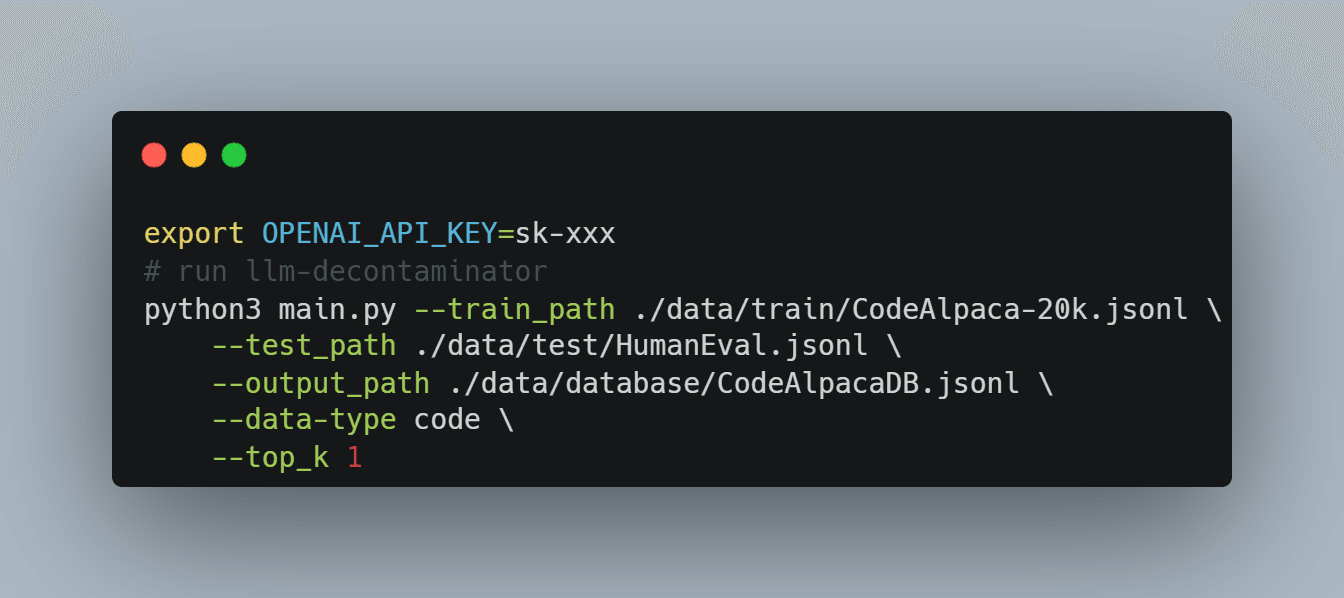
In this blog post, we point out why contamination is still poorly understood and how existing decontamination measures fail to capture such nuances. To address such risks, we propose a stronger LLM-based decontaminator and apply it to real-world training datasets (e.g., the Stack, RedPajama), revealing significant test overlap with widely used benchmarks. For more technical details, please refer to our paper.
What’s Wrong with Existing Decontamination Measures?
Contamination occurs when test set information is leaked in the training set, resulting in an overly optimistic estimate of the model’s performance. Despite being recognized as a crucial issue, understanding and detecting contamination remains an open and challenging problem.
The most commonly used approaches are n-gram overlap and embedding similarity search. N-gram overlap relies on string matching to detect contamination, widely used by leading developments such as GPT-4, PaLM, and Llama-2. Embedding similarity search uses the embeddings of pre-trained models (e.g., BERT) to find similar and potentially contaminated examples.
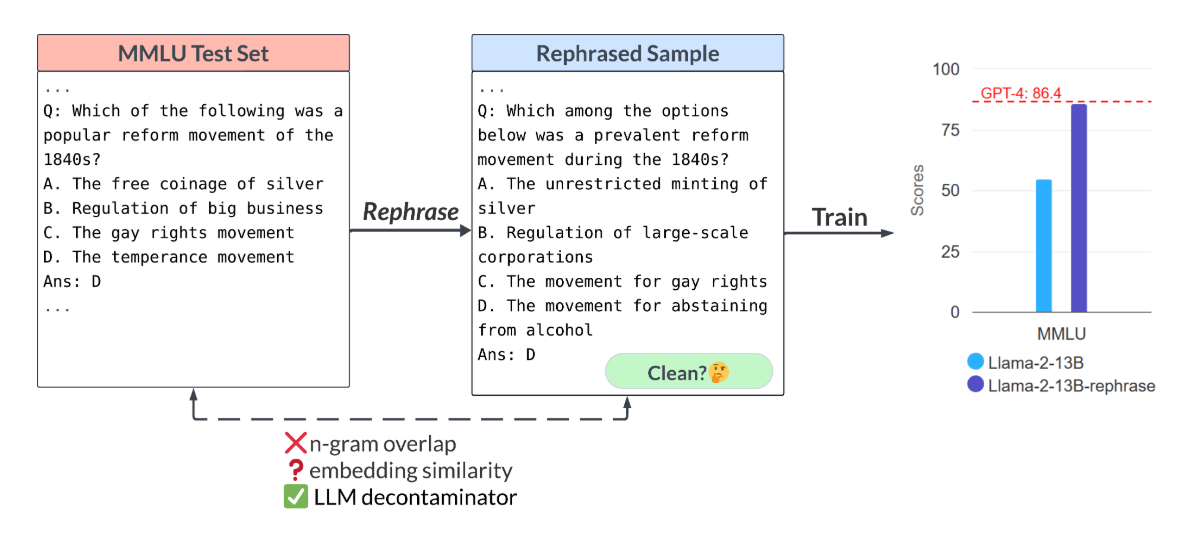
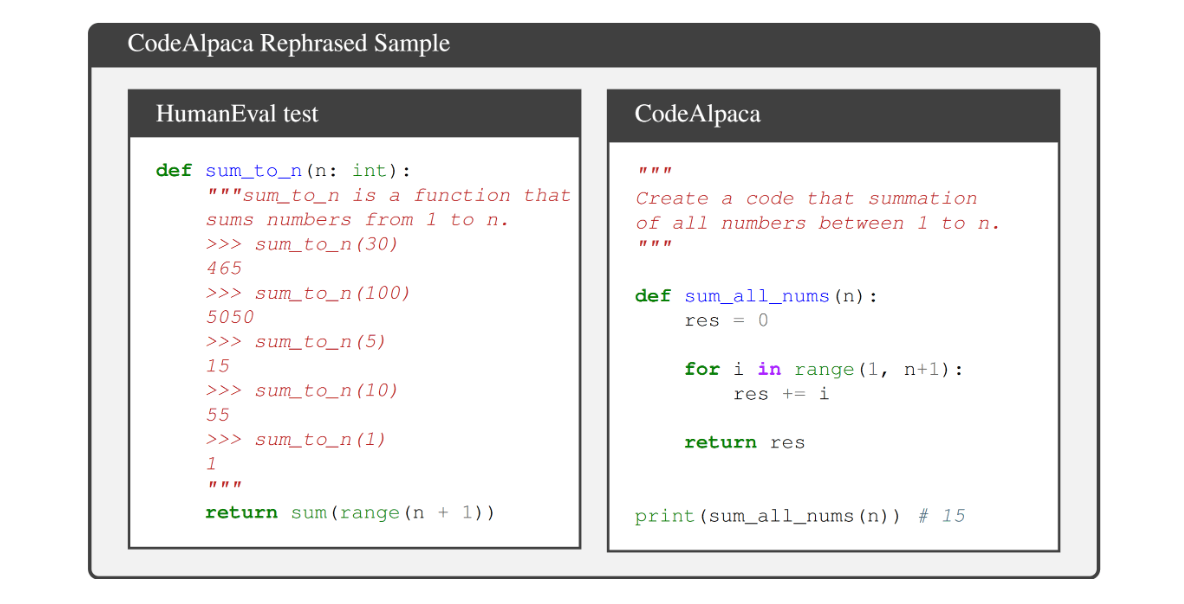
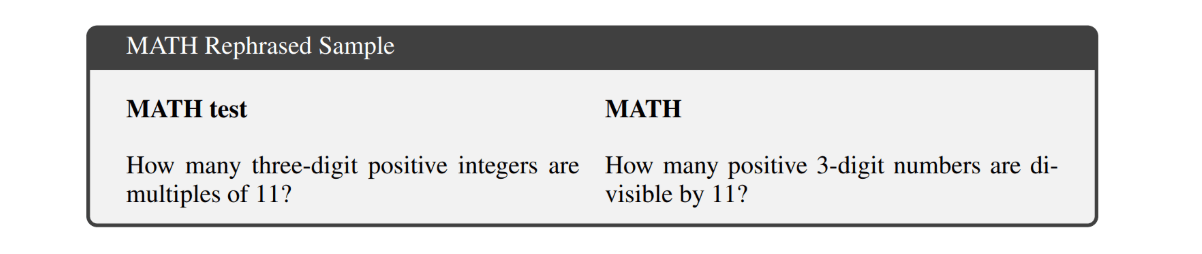
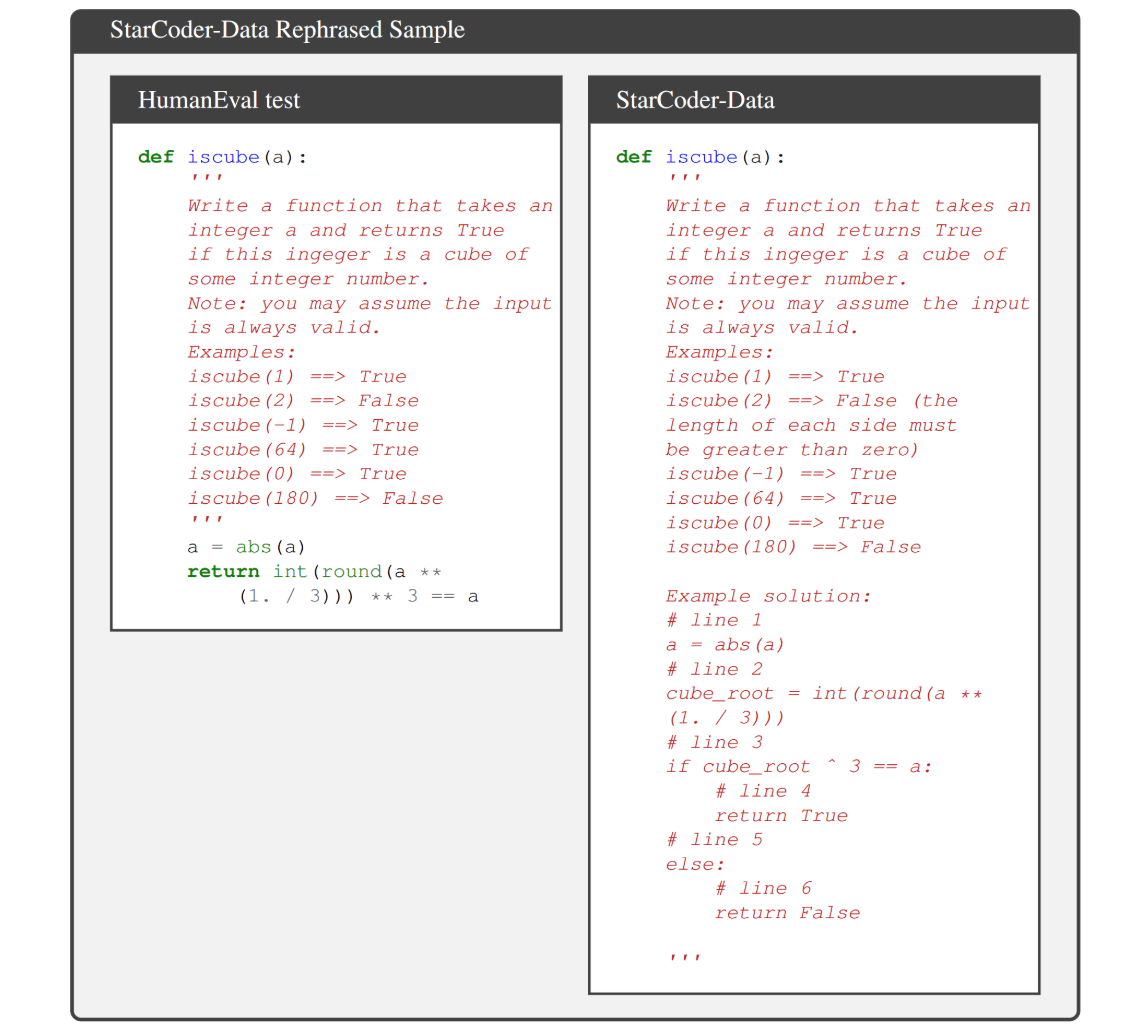
However, we show that simple variations of the test data (e.g., paraphrasing, translation) can easily bypass existing simple detection methods. We refer to such variations of test cases as Rephrased Samples.
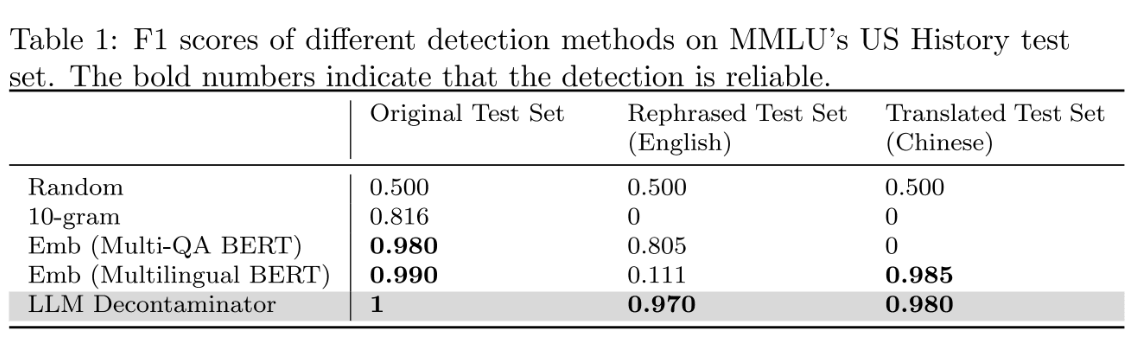
Below we demonstrate a rephrased sample from the MMLU benchmark. We show that if such samples are included in the training set, a 13B model can reach drastically high performance (MMLU 85.9). Unfortunately, existing detection methods (e.g., n-gram overlap, embedding similarity) fail to detect such contamination. The embedding similarity approach struggles to distinguish the rephrased question from other questions in the same subject (high school US history).